You Can Soon Buy a $4,370 Humanoid Robot on AliExpress
Unitree is bringing its R1 to international markets. It arrives with some aerobatic capabilities and an entry-level price, but the question of what you'd actually do with it remains open.
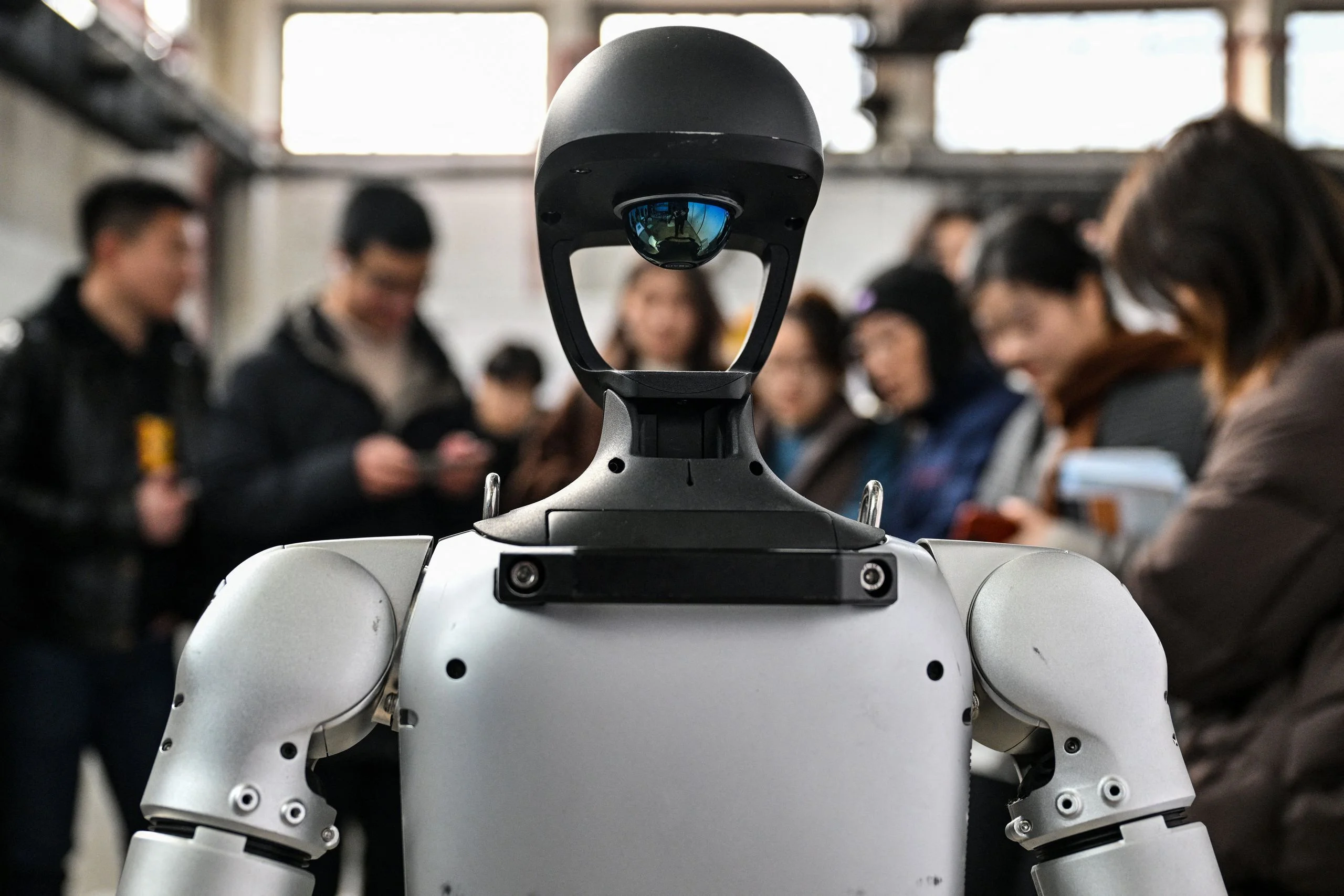
Buying consumer electronics on major online marketplaces represents a turning point in accessibility—transforming specialized products into commodities available at the click of a button. Cars have made this leap (you can now purchase a Hyundai through Amazon in the US), and humanoid robots are next in line.
Chinese robotics firm Unitree Robotics, a leading player in the humanoid space, is set to launch its budget-friendly R1 model on international markets via Alibaba Group's AliExpress platform. According to The South China Morning Post, the initial rollout targets North America, Japan, Singapore, and Europe. While an exact launch date hasn't been confirmed, the report suggests availability could begin as early as this week.
Unitree has leveraged AliExpress as a global sales channel before. The company's G1 model—a more capable and costly predecessor to the R1—is currently available for just under $19,000.
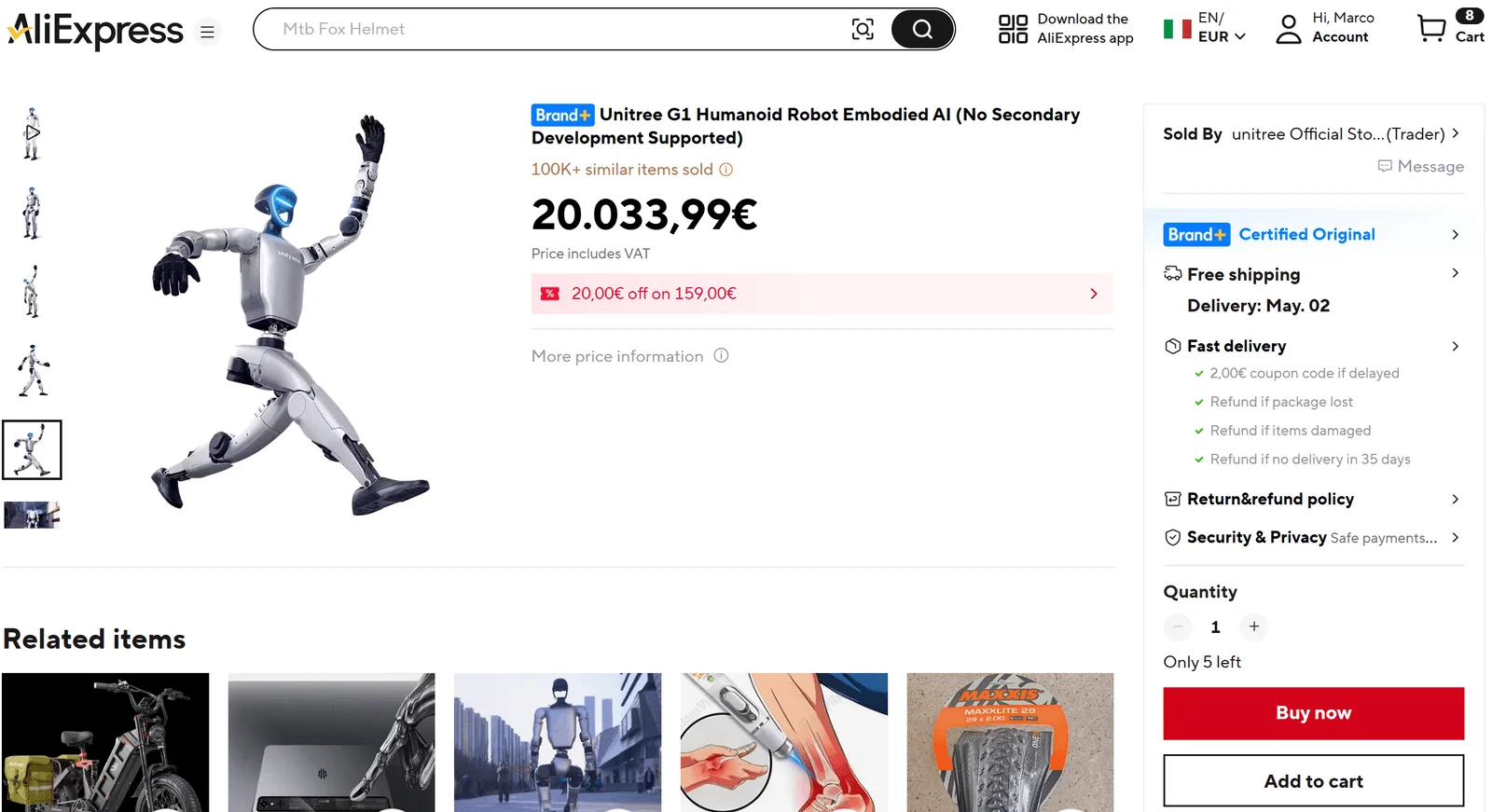
This move carries symbolic weight beyond its commercial implications. Placing a humanoid robot on a mainstream global marketplace signals that the technology is no longer confined to research labs or corporate demonstrations—it's becoming a purchasable reality. The R1's arrival further lowers the barrier to entry, pushing humanoid robots from the realm of future potential into the territory of present-day consumer goods.
Lower Price, Higher Demand
When Unitree unveiled the R1 last summer, it carried a starting price of 39,900 yuan (approximately $5,900). The company has since slashed that figure to 29,900 yuan, roughly $4,370 for the base model.
While exchange rates, shipping fees, import taxes, and tariffs will affect the final cost, the R1's price point stands out as remarkably accessible in the humanoid robotics market, where competitors command significantly higher premiums.
Unitree's own flagship H1 robot costs nearly $90,000. Tesla's Optimus, still unavailable to consumers, targets a sub-$20,000 price—but only after reaching annual production volumes of 1 million units. Robots from Figure AI and Apptronik retail around $50,000 each. In automotive terms, the R1 is the economy hatchback in a field dominated by luxury sedans.
Standing 4 feet tall and weighing 50 pounds, the R1 features 26 smart joints and responds to voice commands through Unitree's integrated large-language multimodal model with voice and image recognition. Developers can customize its behavior using the included software development kit. But the robot's defining characteristic is its athletic capability. It executes cartwheels, transitions from prone to standing positions autonomously, and navigates downhill terrain at a run. Unitree markets it as "born for sport," and demonstration videos that circulated months ago showcase handstands and wheel kicks—acrobatic feats unexpected from a machine priced below many used vehicles.
Put It to Work
Despite its impressive mobility, the R1 has notable limitations. It lacks articulated fingers and its motors produce limited torque, making it unsuitable for household tasks or complex object manipulation. Unitree positions it as an "intelligent companion" for interaction, research, and software development rather than domestic assistance.
The EDU variant (available as Go2 EDU and G1 EDU) incorporates an Nvidia Jetson Orin module for enhanced AI processing power. This version adds two degrees of freedom for head movement and optional articulated right hands, targeting academic institutions and research laboratories. The base R1's constraints similarly position it for researchers, labs, and developers seeking to test robotics algorithms on capable hardware without enterprise-level investment.
By delivering a reasonably capable humanoid platform at this price point, Unitree has meaningfully lowered the entry barrier for developers, researchers, and robotics enthusiasts—a substantial shift from just a few years ago. Of course, some buyers will simply want a conversation piece that can perform a theatrical bow when company arrives.
This story was originally published by WIRED Italia and translated from Italian.