Despite drawing its share of skeptics since launch, the iPhone Air appears to be delivering a compelling vindication of Apple's strategic decision to discontinue the iPhone Plus lineup — at least according to newly published findings from an independent network intelligence firm.
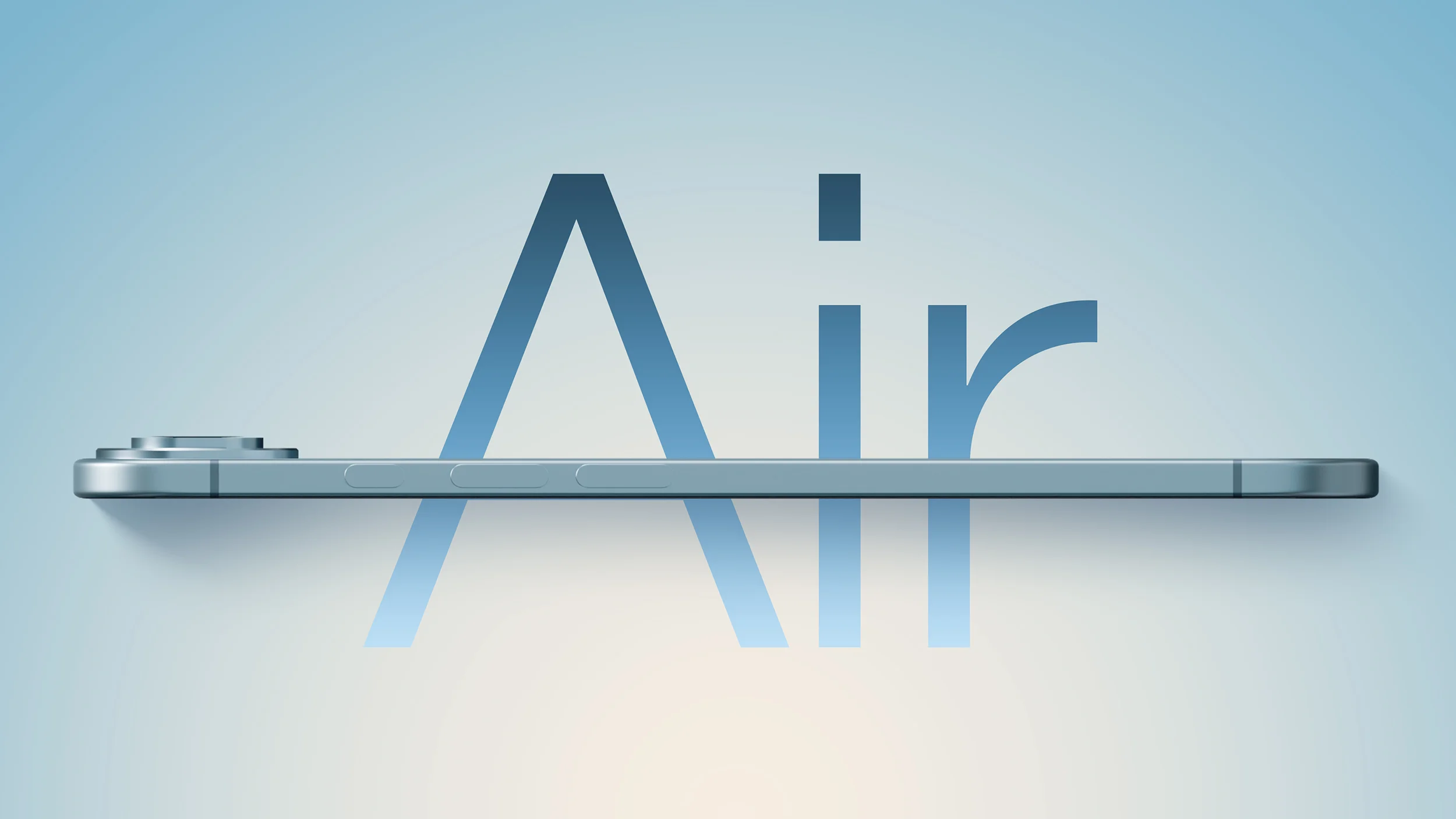
Crowdsourced Speedtest data published by Ookla reveals that the iPhone Air accounted for 6.8 percent of all iPhone 17 generation samples recorded in the United States during the fourth quarter of 2025. That figure represents a striking leap from the 2.9 percent share the iPhone 16 Plus managed during its equivalent launch window twelve months prior — effectively more than doubling its predecessor's early market penetration.
Yet the data tells a more nuanced story beneath the surface. The iPhone Air's gains appear to have come largely at the expense of the iPhone 17 Pro, whose share of the generation's sample pool declined from 34.9 percent to 30.6 percent year over year. The iPhone 17 Pro Max, meanwhile, held its dominant position with only marginal movement, settling at 55.5 percent. The pattern suggests that approximately 4 percent of buyers consciously opted for the Air's ultra-slim form factor over the smaller Pro model's superior camera system and processing headroom — a trade-off that speaks directly to how Apple has positioned thinness as a genuine differentiator rather than a mere aesthetic exercise.
Apple's track record with a fourth distinct iPhone model has historically been challenging. The iPhone mini struggled across two successive generations to find a meaningful audience, while the iPhone 14, 15, and 16 Plus — offering a larger display footprint without the premium feature set of the Pro Max — performed even more modestly, with neither variant managing to move beyond a dedicated but narrow enthusiast base. The iPhone Air, by contrast, has achieved in its opening months what those earlier experiments could not: measurable, broad consumer traction that extends well beyond a niche segment.
International adoption figures from Ookla's dataset reinforce the device's appeal, with the Air recording even stronger penetration in several Asia-Pacific markets. The handset captured an 11.2 percent share in South Korea, 8.9 percent in Japan, and 8.4 percent in Singapore — figures that suggest the ultra-thin design philosophy resonates with particular force in markets where premium device aesthetics and compact engineering have historically commanded strong consumer enthusiasm.
In a separate line of analysis, Ookla's benchmarking examined the connectivity performance of Apple's proprietary C1X modem — the silicon debut of Apple's in-house cellular engineering efforts — against the Qualcomm X80 modem powering the iPhone 17 Pro Max. The findings are notable: the C1X has effectively reached download speed parity with its Qualcomm counterpart, and outperformed it on latency metrics in 19 of the 22 markets analyzed. Upload throughput remains an area where Qualcomm retains a clear advantage, however, with the X80 demonstrating leads of up to 32 percent in certain regions — a gap Ookla attributes to the more mature implementation of Uplink Carrier Aggregation (UL-CA) in Qualcomm's platform. For Apple's silicon team, closing that remaining gap will likely represent the next meaningful milestone in its modem development roadmap.
For the complete breakdown of methodology and market-by-market results, the full analysis is available in Ookla's full report.
This article, "iPhone Air Said to Be Roughly Twice as Popular as iPhone 16 Plus" first appeared on MacRumors.com
Discuss this article in our forums