Apple's iPhone development roadmap extends several years ahead, with the company working alongside suppliers on multiple generations simultaneously. That's why we often see feature leaks months before launch. The iPhone 18 series follows this pattern, and we're already getting a clear picture of what the iPhone 18 Pro and iPhone 18 Pro Max will offer.
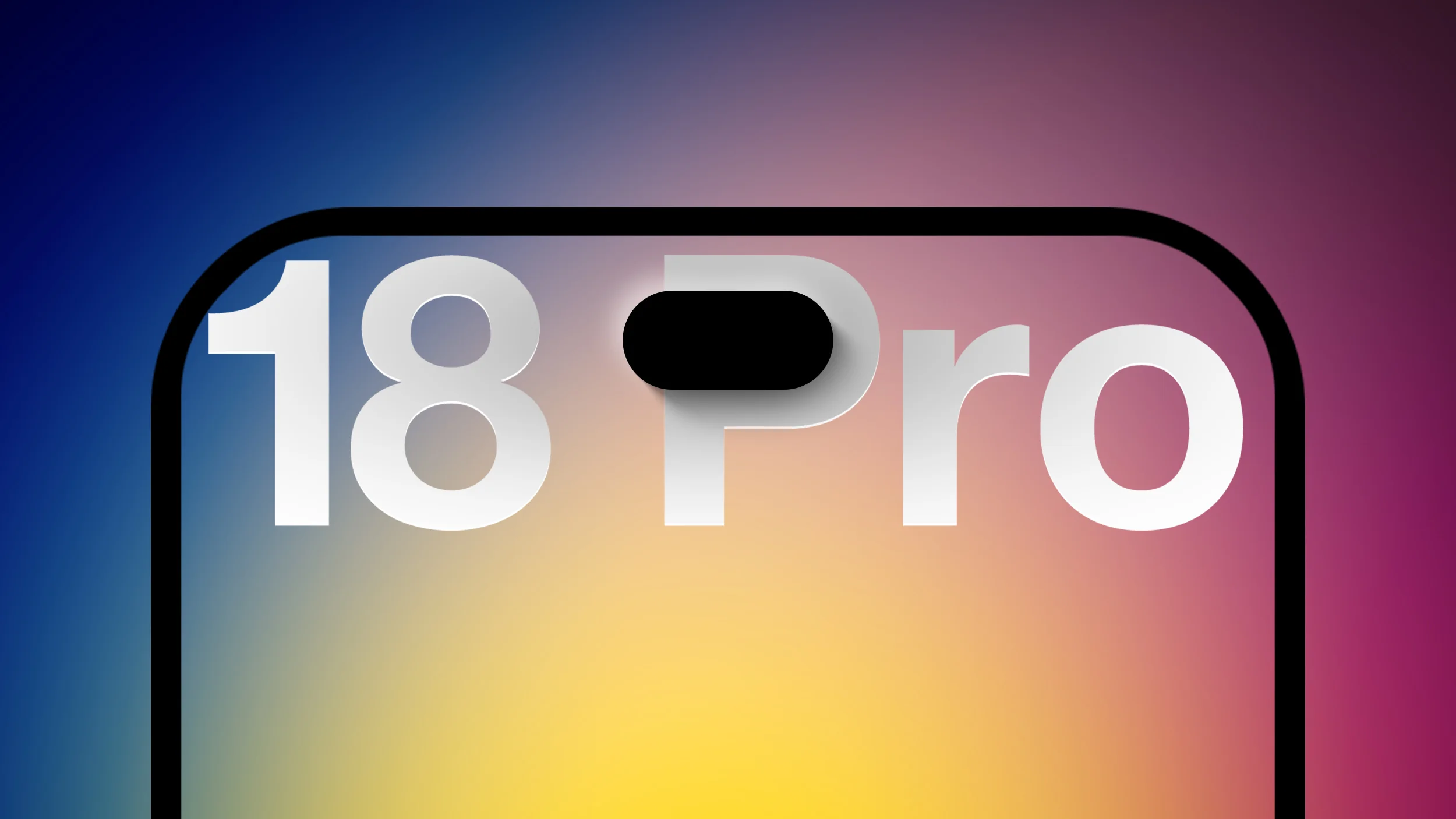
Apple is reportedly planning a significant shift in its release strategy this year, moving to a two-phase rollout beginning with the iPhone 18 series. The iPhone 18 Pro, iPhone 18 Pro Max, and iPhone Fold are expected in September 2026, with the iPhone 18 and iPhone 18e following in spring 2027.
Overall Design
iPhone 17 Pro StyleThe iPhone 18 Pro lineup will largely carry over the design language from the iPhone 17 Pro models. The rear camera system maintains the raised plateau with three lenses in a triangular arrangement. Display sizes remain at 6.3 inches for the iPhone 18 Pro and 6.9 inches for the iPhone 18 Pro Max—the same dimensions introduced with the iPhone 16 Pro series.
One potential change: the iPhone 18 Pro models may abandon the two-tone rear casing found on the iPhone 17 Pro. Apple has reportedly refined the back-glass replacement process to minimize the color contrast between the Ceramic Shield 2 glass and aluminum frame, creating a more unified appearance.
Next-Level Battery Life
Thicker ChassisThe iPhone 18 Pro Max will pack a larger battery to maintain its position as the battery life leader, according to Chinese leaker Digital Chat Station. The device is expected to feature a battery capacity between 5,100 and 5,200 mAh. For context, the iPhone 17 Pro Max currently holds the record at 5,088 mAh, delivering up to 39 hours of battery life.
To accommodate the larger battery, the iPhone 18 Pro Max will be slightly thicker than its predecessor, pushing the weight to approximately 243 grams. That would make it about 3 grams heavier than the iPhone 14 Pro Max, currently Apple's heaviest model.
Smaller Dynamic Island
Under-Screen Face ID?Whether the iPhone 18 Pro will feature under-display Face ID remains unclear, with conflicting reports about the technology's arrival timeline. The feature would relocate the TrueDepth camera system beneath the display, eliminating the Dynamic Island cutout entirely.
Wayne Ma of The Information reports Apple is targeting a design without a Dynamic Island, replacing it with a single pinhole camera in the upper-left corner. However, display analyst Ross Young suggests under-display Face ID is possible but that a smaller Dynamic Island will remain. Bloomberg's Mark Gurman echoes this, reporting the new models will feature a slimmed-down Dynamic Island rather than removing it. Apple is also testing camera miniaturization technology to reduce the front-facing camera size within the Dynamic Island.
Leaker Ice Universe claims the Dynamic Island on iPhone 18 Pro models will be approximately 35% narrower—around 13.5mm compared to the current 20.7mm.
Chinese leaker Instant Digital offers another take: the Dynamic Island will shrink, but under-display Face ID and camera technology won't debut this year. The latest information suggests Apple is weighing two options for the iPhone 18 Pro's Dynamic Island, with no final decision made. One option retains the existing screen design from the iPhone 17 Pro, while the other introduces a significantly smaller "Mini Dynamic Island" by moving Face ID receiver and transmitter components beneath the display.
A20 Pro Chip
2nm ProcessThe iPhone 18 Pro models will run Apple's A20 chip, built on TSMC's 2nm process for improved power efficiency and performance. The move to 2nm fabrication increases transistor density, enabling higher performance. The A20 series is expected to deliver roughly 15% faster speeds and about 30% better efficiency compared to the A19 series in the iPhone 17 models.
Apple's A20 chip will use TSMC's Wafer-Level Multi-Chip Module (WMCM) technology, suggesting at least some A20 chips will integrate RAM directly onto the same wafer as the CPU, GPU, and Neural Engine, rather than positioning it adjacent via a silicon interposer. This could deliver faster performance for general tasks and Apple Intelligence, plus longer battery life through improved power efficiency.
C2 Modem
Replacing QualcommApple plans to include its next-generation C2 modem in the iPhone 18 Pro models, according to supply chain analyst Jeff Pu. The chip succeeds the C1 modem, which debuted in the iPhone 16e as Apple's first in-house cellular modem, and the C1X modem in the iPhone Air, which Apple claims is up to 2× faster than the C1. The C2 is expected to bring faster speeds, improved power efficiency, and mmWave 5G support in the United States—a feature absent from the C1 and C1X.
Apple's modem roadmap is part of a long-term strategy to reduce dependence on Qualcomm, which currently supplies 5G modems for the rest of the iPhone lineup. The company has spent years developing its own cellular chips, aiming for tighter integration and greater control over power management and performance.
New Camera Sensor
Samsung-MadeSamsung is developing a new three-layer stacked image sensor, reportedly intended for the iPhone 18. The sensor, called PD-TR-Logic, integrates three layers of circuitry to improve camera responsiveness, reduce noise, and increase dynamic range. The leak comes from a source known as "Jukanlosreve," who claims the sensor is being developed specifically for Apple's 2026 iPhone lineup. Sony has long been Apple's sole image sensor supplier, so Samsung's entry would mark a significant shift in the iPhone's camera supply chain.
Variable Aperture
DSLR-StyleApple plans to equip this year's iPhone 18 Pro models with a variable aperture lens, according to reports. Weibo-based leaker Digital Chat Station claims the main rear camera—Apple's 48-megapixel Fusion camera—on both iPhone 18 Pro models will offer variable aperture, a first for the iPhone. A variable-aperture system physically adjusts the lens opening, allowing more light in for low-light shots or narrowing for brighter scenes and deeper depth of field.
The main cameras on the iPhone 15 Pro, 16 Pro, and 17 Pro all use a fixed ƒ/1.78 aperture, where the lens remains at its widest setting. With a variable lens, the iPhone 18 Pro would allow manual aperture adjustment, similar to a DSLR camera. This means more control over depth of field, enabling sharper subject focus or smoother background blur. Industry analyst Ming-Chi Kuo said in November 2024 that Apple's iPhone 18 Pro models will get the feature.
5G Satellite Internet
Non-Terrestrial DataAccording to a report by The Information, Apple plans to add support for 5G networks operating via satellites rather than Earth-based towers as early as next year. This would allow future iPhones to gain full internet connectivity through satellite, not just limited emergency features.
If Apple meets the 2026 target, the first devices to feature 5G satellite internet would likely be the iPhone 18 Pro, iPhone 18 Pro Max, and the long-rumored foldable iPhone. Apple partners with Globalstar for its iPhone satellite features, but there is currently no service delivering full 5G satellite internet directly to a smartphone, and the report did not specify who would supply it.
Simplified Camera Control
New DesignApple is reportedly working to simplify the Camera Control button's design on iPhone 18 models to reduce costs. The current Camera Control button on iPhone 17 models uses both capacitive and pressure sensors beneath a sapphire crystal surface. The capacitive layer detects touch gestures, while the force sensor recognizes different pressure levels for taps, presses, and swipes.
However, according to Weibo-based account Instant Digital, Apple will remove the capacitive sensing layer and retain only pressure sensing in the second iteration to achieve all Camera Control functions on the iPhone 18. The simplified version isn't about reducing functionality but about cost savings. The current solution is reportedly very expensive for Apple and generating costly after-sales repairs.
New Colors
Three in TestingIn February 2026, Bloomberg's Mark Gurman reported that Apple is testing a deep red finish for the iPhone 18 Pro and iPhone 18 Pro Max. Rumors of purple and brown finishes have also circulated, but Gurman believes those are variants of the same red concept. The iPhone 14 Pro and iPhone 14 Pro Max were previously available in Deep Purple, and Apple has never released an iPhone in a genuinely brown color. According to a Chinese leaker, Apple's iPhone 18 Pro models won't come in black this year. If true, it will be the second consecutive year Apple has dropped what was arguably its most classic color option for the Pro lineup.
This article, "10 Reasons to Wait for the iPhone 18 Pro" first appeared on MacRumors.com
Discuss this article in our forums