Wikipedia's Wayback Machine Faces Existential Threat to 866 Billion Archived Web Pages
AI & ML

Wikipedia's Wayback Machine Faces Existential Threat to 866 Billion Archived Web Pages

Journalists and advocacy organizations are mobilizing to defend the Internet Archive's extensive web page repository as prominent news publishers block Wayback Machine access to their content.

Apr 13, 2026 5 min read
Federated Identity Management: So funktioniert sichere Authentifizierung über Plattformen hinweg
AI & ML

Federated Identity Management: So funktioniert sichere Authentifizierung über Plattformen hinweg

# Federated Identity: Balancing User Convenience and Enterprise Security Federated Identity addresses one of enterprise security's most persistent tensions — user convenience versus robust access control — by enabling a single set of credentials to authenticate across multiple systems and organizational boundaries. Rather than maintaining siloed identity stores per application, federated models delegate authentication to a trusted Identity Provider (IdP), allowing seamless Single Sign-On (SSO) experiences across heterogeneous environments. Protocols such as SAML, OAuth 2.0, and OpenID Connect form the technical backbone of this architecture, standardizing how identity assertions are exchanged between parties. The core trade-off is complexity. While end users gain frictionless access and IT teams reduce password sprawl, organizations must invest in robust IdP infrastructure, rigorous trust relationship management, and carefully scoped token policies. A misconfigured federation trust or overprivileged token can propagate access risks across every connected system simultaneously — making the blast radius of a breach significantly larger than in isolated identity models. For enterprise architects, the value proposition is clear: federated identity reduces credential fatigue, centralizes access governance, and simplifies offboarding workflows. However, realizing these benefits requires mature identity hygiene practices, continuous monitoring of federation endpoints, and well-defined attribute mapping to prevent privilege escalation across domain boundaries. In short, Federated Identity delivers measurable gains in both usability and security — provided organizations are willing to absorb the upfront architectural complexity it demands.

Apr 13, 2026 5 min
Smarter A/B Testing: How Smaller Experiments Can Drive Greater Revenue
AI & ML

Smarter A/B Testing: How Smaller Experiments Can Drive Greater Revenue

**Rethink A/B Test Sizing: Optimize for Profit Over Statistical Purity** Traditional A/B test sizing focuses on statistical significance, but finite campaigns demand a different approach. When resources are limited, testing becomes a strategic trade-off between learning and earning. Instead of designing tests solely for perfect inference, balance sample allocation against opportunity cost. Prioritize tests that maximize expected profit within your constraints, recognizing that smaller, faster experiments often deliver better business outcomes than statistically ideal but resource-intensive designs.

Apr 12, 2026 5 min
Google Brings End-to-End Gmail Encryption to Android and iOS for Enterprise Users
AI & ML

Google Brings End-to-End Gmail Encryption to Android and iOS for Enterprise Users

Google has expanded Gmail's client-side encryption (CSE) support to Android and iOS, bringing end-to-end encryption capabilities to mobile users for the first time. The update ensures that encrypted email composition and reading can now happen natively on mobile platforms, closing a significant gap that previously limited CSE to desktop environments. For enterprise users and security-conscious organizations already leveraging Gmail's CSE framework, this extension to mobile broadens practical usability without compromising the encryption model where only the sender and recipient hold decryption keys — not Google.

Apr 10, 2026 5 min
Migrate to Google Cloud's Application Load Balancer: Your Step-by-Step Practical Guide
AI & ML

Migrate to Google Cloud's Application Load Balancer: Your Step-by-Step Practical Guide

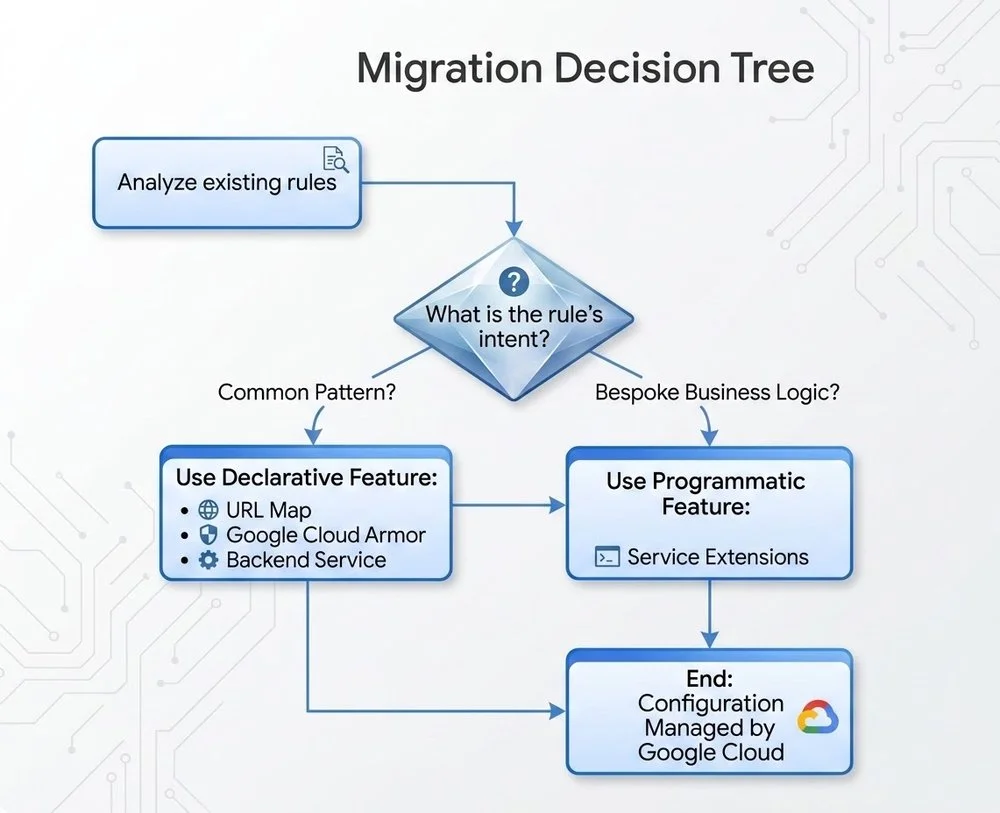
Transitioning application load balancer infrastructure from on-premises hardware to Cloud Load Balancing unlocks meaningful gains in scalability, cost efficiency, and native cloud integration. Unlike static hardware deployments, cloud-native load balancing dynamically distributes traffic across backend services, automatically scaling capacity to match demand without manual intervention. Organizations eliminate the capital expenditure and maintenance overhead tied to physical appliances, shifting to a consumption-based model that aligns costs directly with usage. Deep integration with cloud-native services—including managed health checks, SSL termination, and global anycast networking—reduces operational complexity while improving availability. Teams gain centralized visibility through unified logging and monitoring, accelerating troubleshooting and performance optimization across distributed architectures.

Apr 10, 2026 5 min